Key Takeaways
- The best ai voice generator with emotion should sound natural, offer clear emotion controls, and support fast online production.
- Emotional voiceovers can improve trust, recall, and clarity across ads, lessons, audiobooks, demos, and support content.
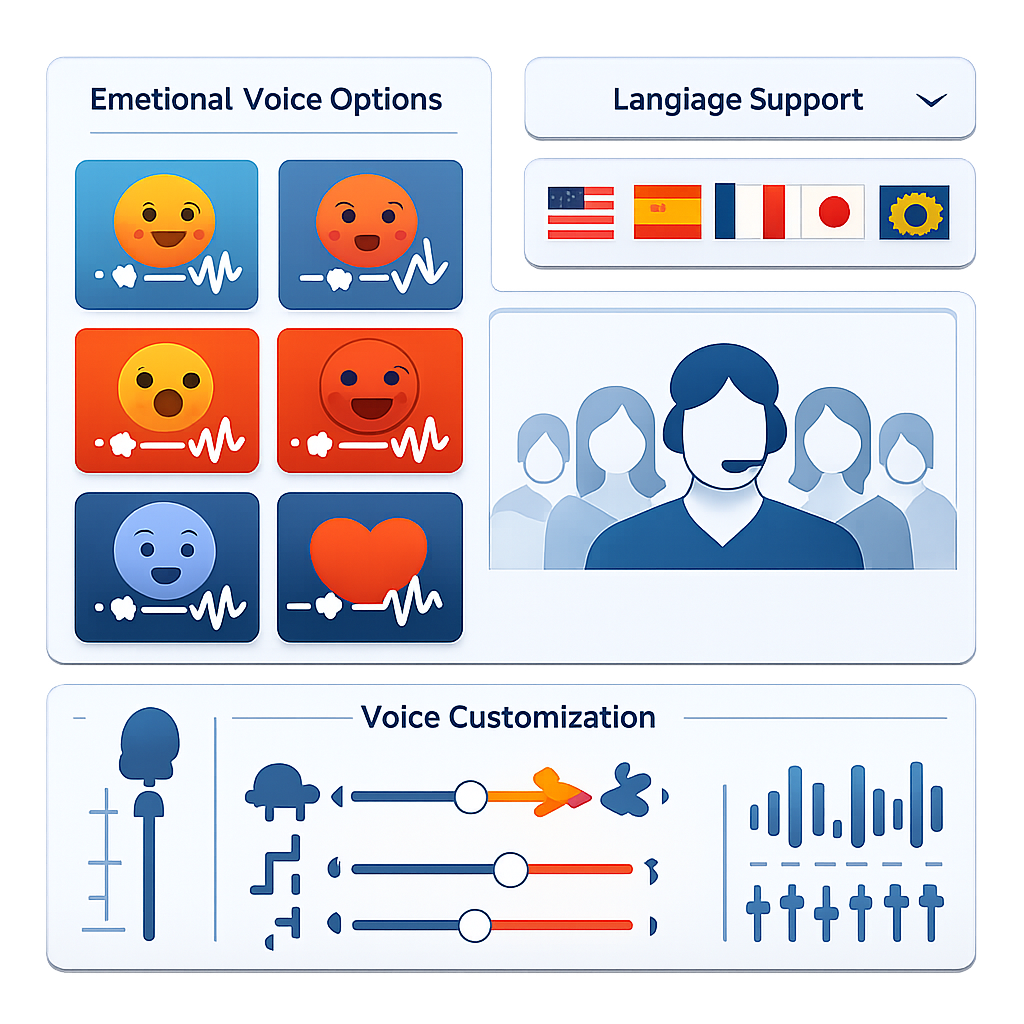
- Strong tools combine emotion presets, voice variety, language coverage, and control over pitch, pace, and delivery.
- Our evaluation focuses on realism, editing speed, multilingual support, scalability, and cost efficiency.
- Revoicer stands out for human-sounding emotional voices, browser-based use, and flexible controls for different project types.
Finding the best ai voice generator with emotion is not only about clean text-to-speech. It is about whether a voice can teach, persuade, reassure, or tell a story without sounding flat. This guide explains what matters, how emotional AI voices work, and why Revoicer is a strong option for teams that need fast, scalable voiceovers.
Published: April 2026
Best AI Voice Generator With Emotion Guide
Why trust this guide: Our team reviewed emotional AI voice tools based on realism, emotion control, language coverage, workflow speed, and business fit. We also checked public product information and speech technology references to keep this guide practical.
Best AI Voice Generator With Emotion: What to Look For
If you are comparing tools, start with outcomes, not long feature lists. The best ai voice generator with emotion should help you create voiceovers that sound believable in real projects, whether that is a sales video, e-learning lesson, audiobook sample, or support explainer.
We recommend scoring tools against five simple criteria:
- Natural delivery: The voice should avoid robotic pacing, strange emphasis, and harsh transitions.
- Emotion range: You need moods such as friendly, calm, confident, urgent, empathetic, or excited.
- Editability: Good tools let you adjust speed, pauses, pitch, pronunciation, and style.
- Language support: Multilingual teams need broad coverage without a hard audio workflow.
- Production efficiency: Browser-based workflows save time compared with recording and retakes.
| Evaluation Factor | Why It Matters | What Good Looks Like |
|---|---|---|
| Emotional realism | Flat audio lowers engagement | Voices sound expressive, not exaggerated |
| Voice selection | Different projects need different tones | Multiple genders, ages, accents, and styles |
| Controls | One default read rarely fits every script | Pitch, speed, pauses, emphasis, pronunciation |
| Online workflow | Teams need fast iteration | Browser-based creation and export |
| Cost efficiency | Scalability matters for recurring content | Lower cost than repeated studio sessions |
Want to hear how emotional AI voices can fit marketing, training, and storytelling projects without a complex studio workflow?
Why Emotional AI Voiceovers Matter for Modern Content
Emotion changes meaning. The same sentence can feel reassuring, urgent, playful, or authoritative depending on delivery. That is why emotional AI voiceovers matter. They shape trust and attention.
According to Wikipedia’s overview of prosody, rhythm, stress, and intonation are core parts of spoken meaning. Voice is not just words read aloud. It is also the pattern that tells listeners what matters and how to feel.
Speech prosody carries information beyond the literal words, including emotion, intent, and emphasis.General speech science consensus reflected in linguistic references and text-to-speech research
🎯 Better conversion
A warm, confident voice can make product benefits feel clearer and more credible.
📚 Better learning
Students process spoken lessons more easily when narration sounds alive and well paced.
🎙️ Better storytelling
Emotion helps scenes, characters, and dramatic beats land without a full studio setup.
🤝 Better support
Calm, empathetic tones help onboarding and help content feel more human.
Teams that publish often face a simple problem: human recording is hard to scale. Emotional AI voice tools help close that gap. They give teams repeatability without settling for monotone output.
For more context on synthetic speech, Google Cloud Text-to-Speech documentation and Microsoft Azure AI Speech both highlight the value of voice style, speaking rate, and neural quality in production-grade systems.
How Emotion-Based AI Voice Generation Works
Emotion-based AI voice generation combines neural text-to-speech with style modeling. In simple terms, the system does not only convert text into audio. It also predicts how the line should be performed.
That delivery can include:
- Changes in pitch
- Faster or slower pacing
- Longer or shorter pauses
- Different stress on key words
- Energy shifts across a sentence
Modern systems are often trained on large voice datasets with labeled speaking styles. Some tools show this as presets such as cheerful, serious, empathetic, or excited. Others let users fine-tune the output manually.
This is why emotion control matters more than raw voice count. A library of 100 voices is less useful if all of them sound flat. The best ai voice generator with emotion should make style a core control, not a small extra.
Core Features That Define the Best AI Voice Generator With Emotion
Below are the features that separate a basic text-to-speech tool from a serious emotional voice platform.
Emotion Presets That Match Real-World Use Cases
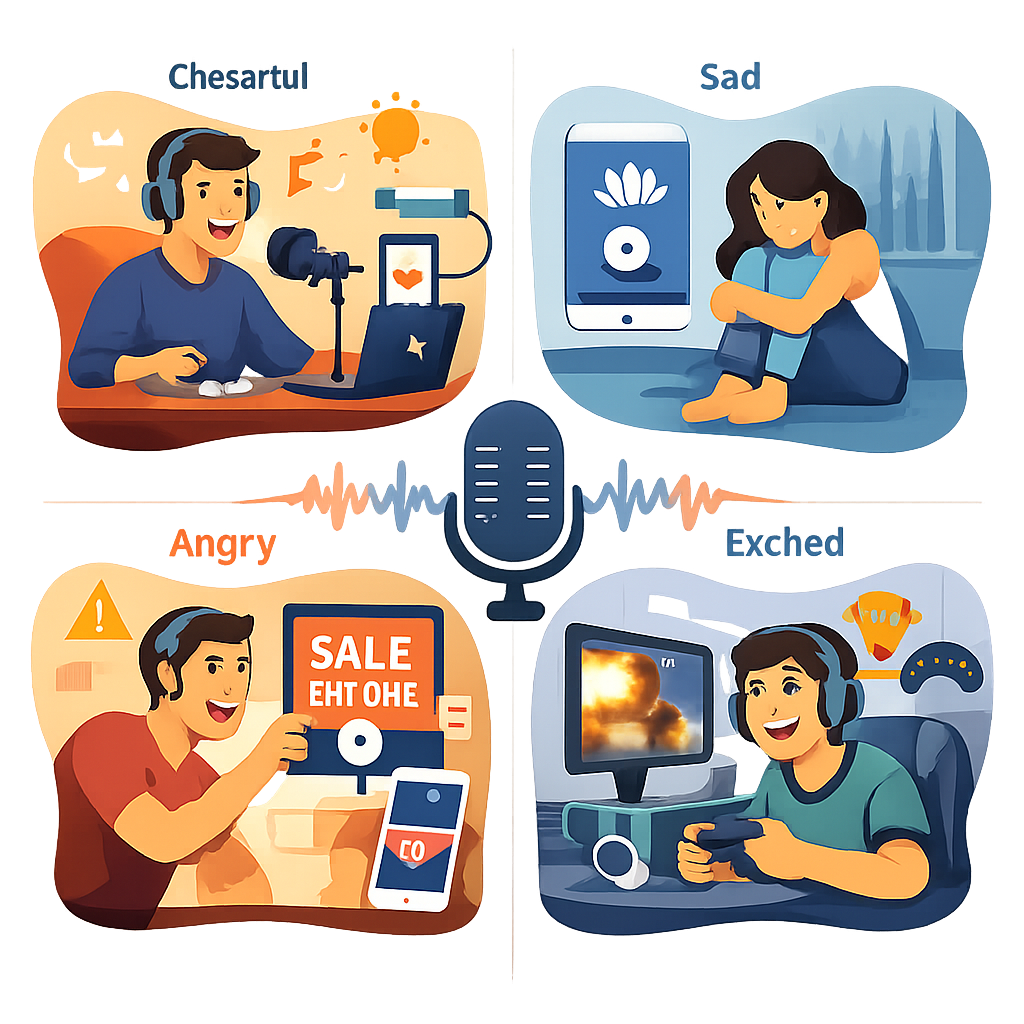
Good presets should match common business and creative goals. Think confident for sales, calm for onboarding, empathetic for support, and energetic for promos. The point is not novelty. The point is fit.
Voice Variety and Language Coverage
Voice variety matters because audiences respond differently to age, accent, vocal texture, and speaking style. Revoicer positions itself around broad project fit and multilingual creation, which is useful for global teams producing explainers, sales content, and educational material.
If your business creates localized content, language support should be a buying criterion from day one. A strong emotional AI voice platform should let you create voiceovers in other languages with only a few steps.
Customization for Voice Type, Pitch, and Speed
Even the best preset will not match every script. That is why pitch, speed, pause control, and pronunciation editing matter. Small changes can make a big difference. A product demo may need a slower pace. A social ad may need more energy.
100% Online Workflow for Faster Production
Workflow is often the most overlooked feature. If the whole process happens online, you remove setup friction. No microphone checks. No room noise. No retakes because one sentence changed after recording.
That is where the best ai voice generator with emotion can outperform traditional voiceover production for recurring content. You can revise a script, regenerate the audio, and keep moving.
Best Use Cases for Emotion AI Voice Generators
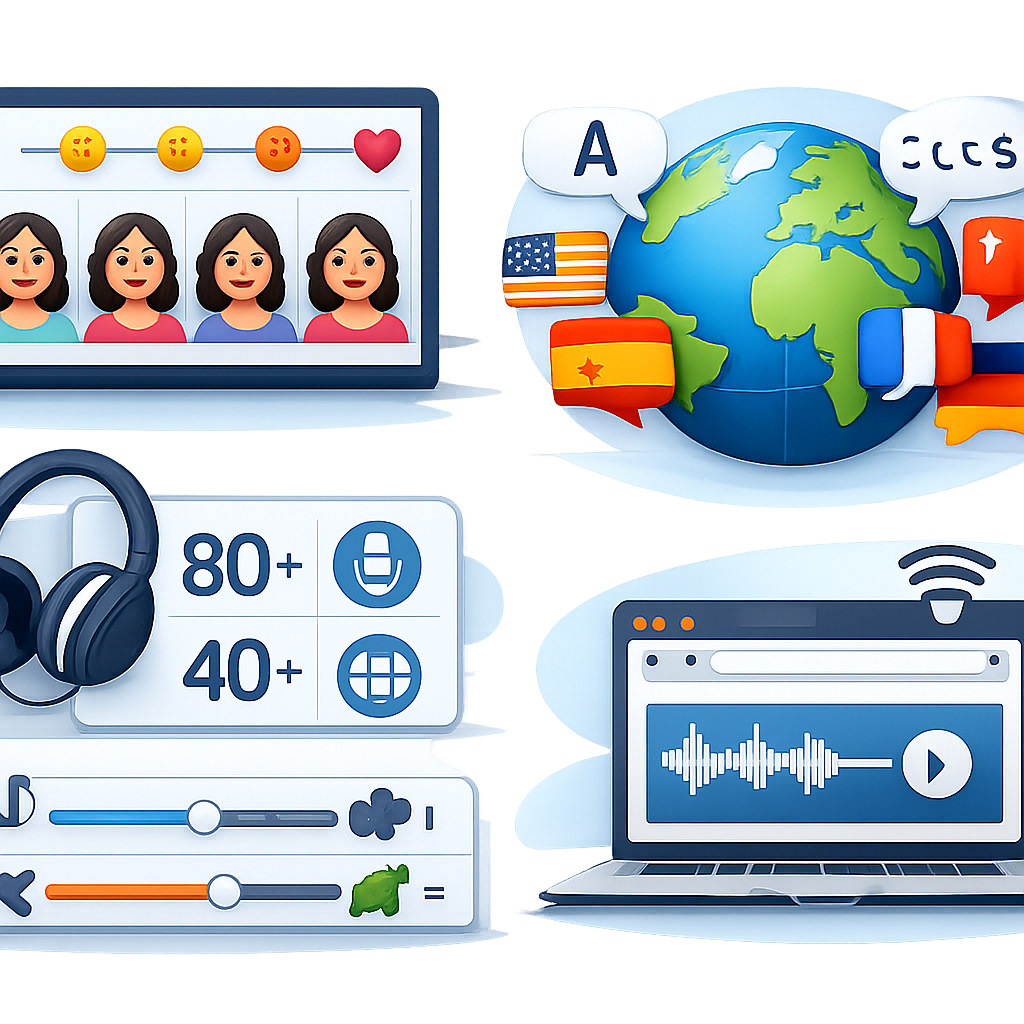
The best ai voice generator with emotion is useful anywhere meaning depends on tone.
For Marketers and Sales Content
Marketers need voices that sell without sounding pushy. Emotional AI works well for video sales letters, product promos, social ads, landing page videos, and demo narration.
A confident and upbeat voice can improve message clarity. It also helps brands stay consistent across many creatives. If your team already publishes content about AI voice generator selection, this emotional layer is often the missing conversion lever.
For Educators, Students, and Course Creators
Education content works better when narration guides attention. A calm, encouraging voice supports comprehension and can reduce fatigue in longer modules.
Course creators often benefit most from three settings: moderate speed, clear enunciation, and gentle emphasis on key terms. That combination sounds helpful rather than theatrical.
For Authors, Podcasters, and Storytelling
Storytelling is where emotional voice generation becomes especially useful. Authors can test audiobook passages before hiring talent. Podcasters can create intros, transitions, and trailers faster. Fiction creators can experiment with tone before a final production pass.
If you cover related topics such as text to speech with emotions, the practical difference here is scale. Emotional AI lets storytellers test many versions quickly.
For Customer Support and Product Teams
Support and product teams often overlook voice, but it matters in onboarding, tutorials, and help center media. An empathetic tone can make instructions feel less cold. A steady pace can reduce confusion in setup videos and walkthroughs.
We consistently see stronger engagement when narration matches the job of the content. A support video should calm. A launch video should energize. A course lesson should guide.Our editorial evaluation framework for AI voice tools, 2026
How Revoicer Stands Out as an Emotion-Based AI Voice Solution
Revoicer is built around emotional AI voice generation for practical business and creative use. Its value is simple: help users create human-like voiceovers online, with emotional range, without the cost and friction of traditional recording workflows.
Human-Sounding Emotional Voices at Scale
The strongest Revoicer angle is emotional delivery. Many basic TTS tools sound clean but emotionally empty. Revoicer focuses on voices that feel more real and fit different project types, from marketing to storytelling.
For teams publishing often, scale matters as much as realism. You need to produce multiple assets without booking talent, scheduling pickups, or rebuilding the workflow every time one line changes.
Built for Speed, Simplicity, and Cost Efficiency
Revoicer uses an online workflow. That makes it attractive for marketers, educators, students, authors, podcasters, customer support teams, and product developers who want a fast path from script to usable audio.
-
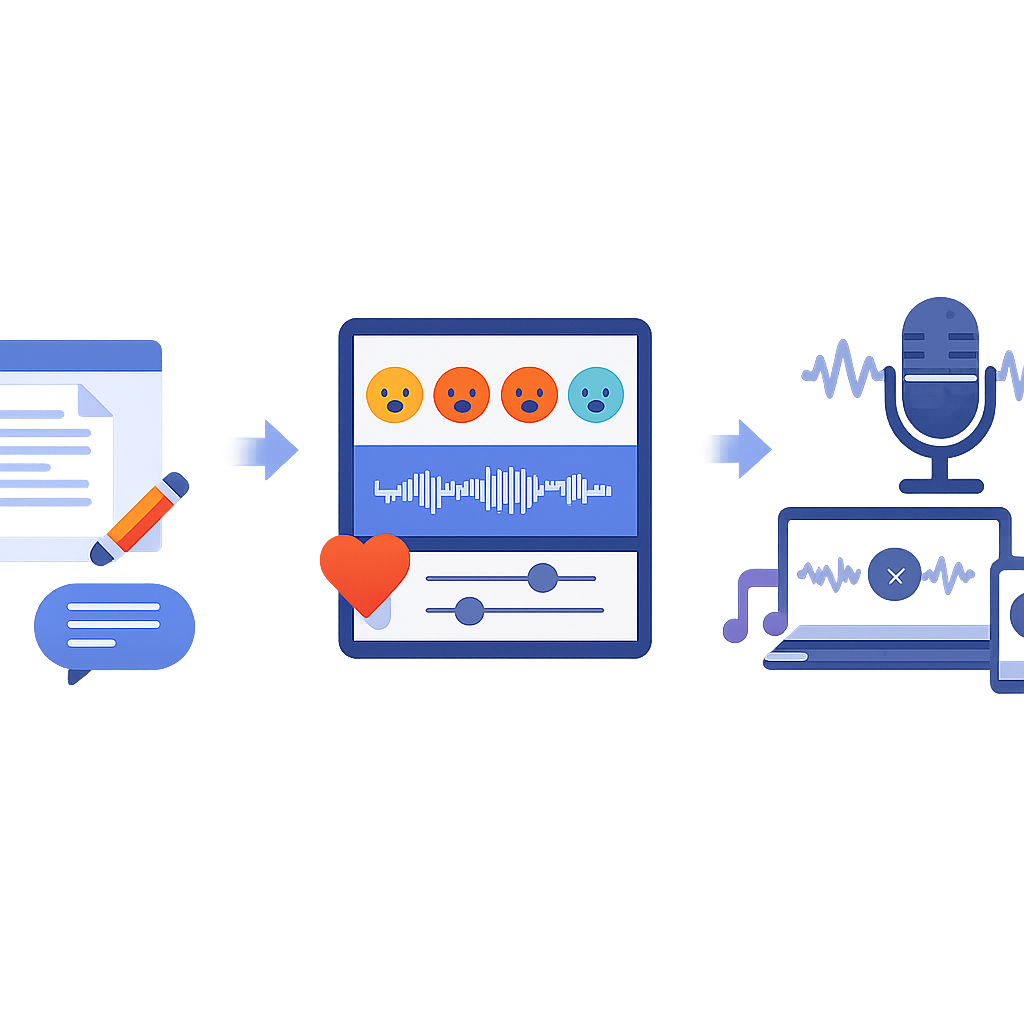
Write or paste your script.
Start with the exact copy you need for the lesson, ad, story, or walkthrough.
-
Select a voice and emotional style.
Match the delivery to the project goal: reassuring, persuasive, informative, or dramatic.
-
Tune speed, pitch, and pacing.
Make small edits instead of re-recording full takes.
-
Generate and export.
Move quickly from draft to publishable audio in a browser-based environment.
For businesses producing frequent content, that workflow can be much cheaper than repeated studio sessions. It also reduces bottlenecks between copy, production, and publishing.
Custom Emotions and Flexible Voice Control
A tool becomes truly useful when it lets you shape delivery, not just choose a preset. Revoicer’s appeal is that it combines emotional voice output with flexible control, which is what serious users need once they move beyond one-off samples.
How to Choose the Right Emotional Voice for Your Project
Choosing the right voice is part strategy and part editing. Use this simple framework:
- Start with the goal: Is the job to persuade, reassure, explain, or entertain?
- Match the audience: Students, buyers, and support users respond to different tones.
- Adjust pacing: Faster for ads, slower for tutorials and learning content.
- Use emphasis carefully: Highlight key phrases, but avoid overacting.
- Localize thoughtfully: Accent and language should fit the market and context.
If you are unsure, create two versions. Make one slightly more expressive and one more restrained. In many cases, the restrained version wins for B2B, education, and support content, while the more expressive version works better for promos and story-led media.
Common Mistakes to Avoid When Using AI Emotional Voices
Even the best ai voice generator with emotion can produce weak results if the script or settings are off.
Another mistake is judging a tool from one sample sentence. Emotional quality becomes clearer in longer passages, mixed sentence lengths, and real production copy. Always test short ads, longer explanations, and branded terms before deciding.
Final Thoughts: Choosing the Best AI Voice Generator With Emotion
The best ai voice generator with emotion is the one that helps you produce believable audio at the speed your team needs. Real value comes from natural delivery, emotional range, multilingual flexibility, and a workflow simple enough for non-technical users.
For marketers, educators, students, authors, podcasters, support teams, and product developers, Revoicer is compelling because it focuses on the practical outcome: human-like emotional voiceovers created online, quickly, and with flexible control.
If your content depends on tone, not just text, the best ai voice generator with emotion deserves a serious place in your stack.
Ready to move from flat narration to voiceovers that feel more human and better matched to your content goals?
Frequently Asked Questions
What is the best ai voice generator with emotion for business content?
The best option combines realistic voices, emotion presets, fine control over speed and pitch, and a fast online workflow. For many business and creative users, Revoicer stands out because it focuses on emotional delivery and ease of use.
Do emotional AI voices actually improve engagement?
They can. Emotion helps listeners interpret intent, emphasis, and tone. That can improve clarity, retention, and trust in ads, courses, product explainers, and storytelling content.
How do I choose the right emotion for a script?
Start with the job of the content. Use confident or upbeat tones for sales, calm and supportive tones for education and onboarding, and more expressive tones for storytelling. Then adjust pacing and emphasis to fit the audience.
Can emotional AI voice generators work for multiple languages?
Yes, many modern tools support multilingual voice creation. This is useful for brands and educators who need localized content without recording every version manually.
What matters more: number of voices or quality of emotion?
Quality of emotion usually matters more. A smaller voice library with convincing emotional delivery and strong controls is often more useful than a huge library of flat voices.
What should I test before choosing a platform?
Test short promotional copy, longer educational narration, and any technical or branded terms your team uses often. Check realism, emotional fit, editing controls, and how quickly you can revise and regenerate audio.