
Key Takeaways

- The best text to speech ai should sound natural, be easy to edit, and support fast production.
- Different tools fit different jobs. Marketers, educators, authors, and product teams need different strengths.
- Revoicer stands out for emotion control, browser-based access, and broad language support.
- Traditional voiceovers still matter for premium performance, but AI wins on speed, scale, and easy revisions.
- The right choice comes from matching features to your workflow, not just picking the cheapest plan.
If you are looking for the best text to speech ai, focus on three things first: voice quality, editing speed, and ease of use. Many tools sound good in a short demo. Fewer tools stay useful when you need fast revisions, many versions, or multilingual output.
Best Text to Speech AI: What to Look For in 2026
The market has changed fast. Buyers no longer want robotic narration. They want clear speech, better pacing, emotional range, and simple controls. The best text to speech ai should help a team publish faster, not create more work.
That shift matches wider AI adoption. According to McKinsey, companies keep expanding AI across marketing, operations, and product workflows. Voice generation fits well because it cuts production time and reduces the need to book live talent for every update.
This guide compares what matters most for marketers, educators, authors, support teams, and creators. It also looks at Revoicer alongside tools such as ElevenLabs, Speechify, WellSaid, Hume, DupDub, Respeecher, and Altered.
What Makes the Best Text to Speech AI?

The best text to speech ai combines natural sound, easy editing, and a workflow people will actually use. A realistic voice is not enough if revisions are slow. A cheap tool is not a bargain if the output sounds flat.
🎙 Voice realism
Look for natural pacing, clear pronunciation, and fewer robotic artifacts.
🎛 Editing control
Pitch, speed, and tone should be easy to adjust without audio expertise.
🌍 Language range
Global teams need multiple languages and accents that sound local.
⚡ Workflow speed
Fast rendering and simple revisions matter more than feature overload.
Natural-sounding voice quality
Voice quality is the first test. If the audio sounds synthetic, listeners notice right away. That matters in ads, onboarding, lessons, and audiobooks.
Top platforms now compete on cadence and realism. ElevenLabs is known for lifelike output. Hume focuses on expressive speech. Speechify is useful for pacing and pronunciation. The best text to speech ai should avoid awkward pauses, clipped words, and monotone delivery.
According to NIST speech research resources, intelligibility and naturalness remain core benchmarks in synthetic speech evaluation.National Institute of Standards and Technology
Emotion and tone control
Words alone do not carry a message. Delivery matters too. A sales video needs confidence. A lesson needs clarity. A story needs mood. The best text to speech ai gives you control over tone so the same script can fit different goals.
Language coverage and accent flexibility
Many teams start with one language and expand later. If your platform cannot grow with you, migration becomes painful. Good language support helps with localization, training, and product adoption.
- Localized marketing: Adapt one campaign for several regions.
- Education at scale: Turn one lesson into multilingual modules.
- Product support: Create onboarding audio for global users.
Ease of use and online accessibility
The best text to speech ai should be simple enough for nontechnical teams. Browser access is a big plus. It removes setup issues and makes collaboration easier.
Best Text to Speech AI Tools for Different Needs
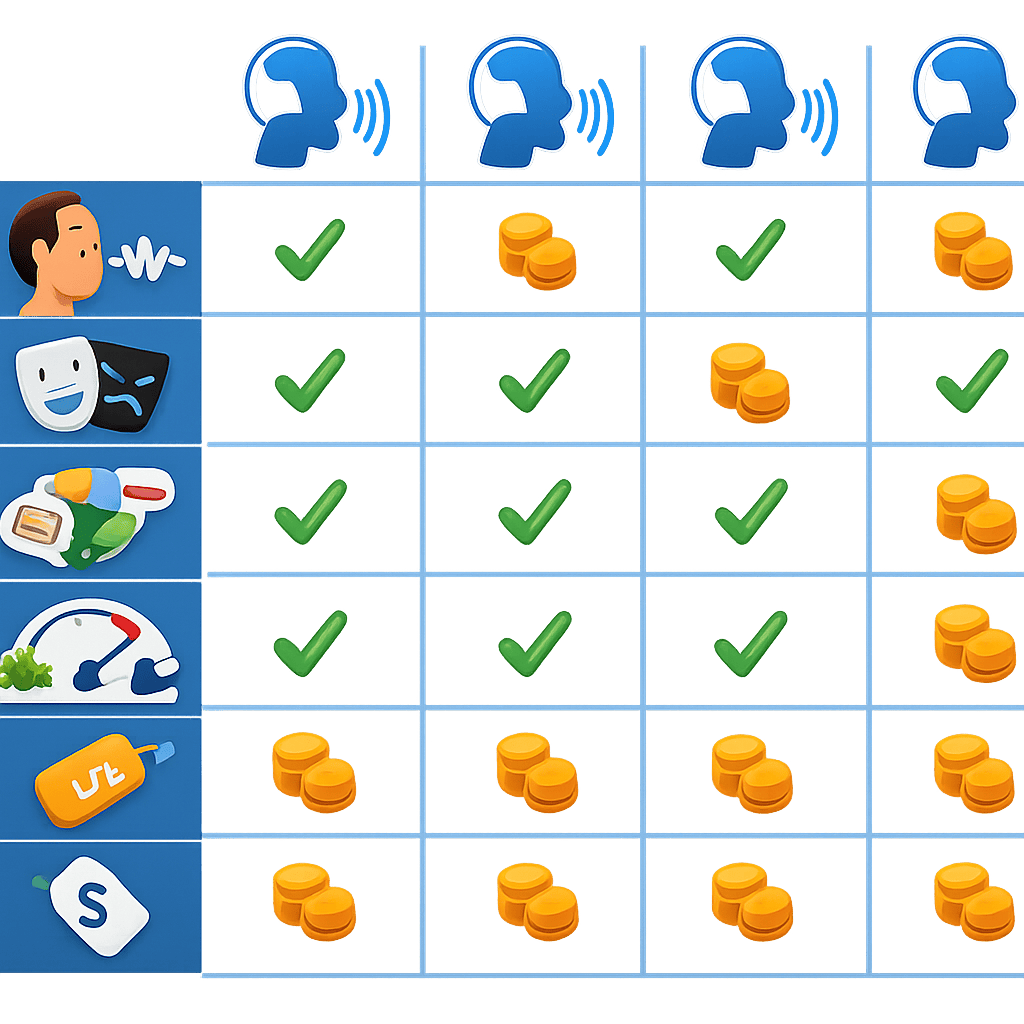
No single tool wins every category. Some focus on realism. Others focus on accessibility, enterprise narration, or creative voice design. The right pick depends on your daily workflow.
| Tool | Best for | Standout strength | Watch-out |
|---|---|---|---|
| Revoicer | Marketers, educators, creators, teams needing scalable voiceovers | Emotion-based delivery, 80+ English voices, 40+ languages, browser-based workflow | Best value appears when you need frequent production |
| ElevenLabs | High realism and voice design | Natural-sounding output and strong creator appeal | May be more than some teams need |
| Speechify | Reading, accessibility, timing control | Pronunciation and pacing features | Less focused on branded marketing production |
| WellSaid | Professional narration | Studio-style voices and control | Can feel enterprise-heavy for small creators |
| Hume | Expressive speech | Emotion-focused output | Best for users who want experimentation |
| DupDub | Creator workflows | Variation options | Check consistency across large projects |
| Respeecher | Advanced editing | High-end voice production | May exceed everyday business needs |
| Altered | Creative voice work | Transformation features | Better for specialists than simple narration |
Best for marketers and video creators
Marketing teams need speed and repeatability. Ads, VSLs, social videos, and promos often require many versions. Revoicer is a strong fit because it is built for quick online voiceover production with useful controls.
Best for educators, students, and course creators
Educational audio needs clarity and consistency. Revoicer works well for lessons and explainers. Speechify is also relevant when accessibility and listening workflows matter most.
Best for authors and storytellers
Storytelling needs pacing and emotional color. Hume, ElevenLabs, and Revoicer all deserve a look. For many authors, the best text to speech ai is the one that lets them test voices quickly and revise chapters without re-recording everything.
Best for customer support and product teams
Support teams care about speed, consistency, and multilingual reach. Browser-based tools with reusable settings are often the best fit for onboarding, help content, and feature updates.
Why Revoicer Stands Out Among Text to Speech AI Tools
Revoicer is designed for users who want realistic AI voiceovers without technical overhead. Its main strengths are human-sounding voices, emotion-based delivery, online access, and scalable production.
Emotion-based AI voice generation for more human delivery
One of Revoicer’s biggest strengths is emotion control. That matters because listeners react to delivery, not just wording. A promo, tutorial, and story chapter should not sound the same.
80+ human-sounding voices in English and 40+ languages
Revoicer highlights 80+ human-sounding voices in English and support for 40+ languages. That is useful for agencies, educators, and global brands that want one workflow for many markets.
100% online with customizable pitch, speed, and voice type
Because Revoicer is online, teams can work from a browser without local software. Users can adjust pitch, speed, and voice type inside the same workflow.
- Adjust delivery for ads, tutorials, or calm narration.
- Work from any browser without a studio setup.
- Keep production simple for marketers, instructors, and product teams.
Built as a scalable alternative to traditional voiceovers
Traditional voiceovers can be excellent, but they are harder to scale. Revoicer is better suited to recurring campaigns, course libraries, product walkthroughs, and frequent script updates.
In many content workflows, the biggest cost is not the recording session. It is the delay and rework after each script change.Editorial assessment based on common marketing and training production workflows
How to Choose the Right AI Voice Generator for Your Use Case
The best text to speech ai for your team depends on content type, revision frequency, and audience expectations. Use this simple framework before you buy.
-
Define the job.
Know whether you are creating ads, lessons, product explainers, or long-form narration.
-
Score realism and emotion.
Listen for pacing, emphasis, and whether the voice fits your brand.
-
Test editing speed.
Make a small script change and see how fast you can update the audio.
-
Plan for scale.
Check language support, team access, and consistency across many assets.
For short-form ads and sales videos
Prioritize emotional punch and fast variant creation. If you test many hooks, the best text to speech ai is the one that helps you publish quickly.
For eLearning, explainers, and tutorials
Choose clarity over drama. Stable pacing and easy script updates matter most. Revoicer and Speechify both fit this use case, though Revoicer is more production-focused.
For podcasts, audiobooks, and storytelling
Long-form content exposes weak cadence fast. Test chapter transitions, dialogue, and emotional shifts before you commit.
For global content and multilingual teams
Do not treat language support as a bonus. Treat it as core infrastructure. Revoicer’s 40+ language coverage is a clear advantage for teams with international plans.
Text to Speech AI vs Traditional Voiceovers
This is not an all-or-nothing choice. Human voice actors still deliver the best custom performance for some projects. But AI often wins for business content that needs speed and repeatability.
Speed and production turnaround
AI voice generation is much faster. You can go from script to audio in minutes. That matters when campaigns change or product copy updates.
Cost efficiency at scale
Traditional voiceovers can work well for one polished asset. They become harder to justify when you need many versions, many languages, or frequent updates. The best text to speech ai lowers production cost as volume grows.
Revision flexibility and consistency
AI is especially strong when scripts change often. Teams can update lines quickly while keeping the same voice identity.
What experienced teams usually value most
“For training libraries, consistency beats novelty. We need every module to sound like it belongs to the same course.”Typical eLearning production priority
“For paid media, the real win is speed. If we can test fresh hooks the same day, performance improves.”Typical growth marketing priority
Common Mistakes to Avoid When Choosing Text to Speech AI
Many buyers compare tools the wrong way. That leads to weak output and poor adoption.
Choosing based on price alone
A cheaper tool that sounds robotic or slows your workflow is not really cheaper.
Ignoring emotion and delivery style
Flat delivery can hurt trust and engagement. This is one reason emotion control matters when choosing the best text to speech ai.
Overlooking workflow simplicity
If teammates need long training just to create a clean voiceover, usage will drop.
Not planning for multilingual growth
If localization may matter later, choose a platform that can scale with you now.
Is Revoicer the Best Text to Speech AI for Your Team?
For many business and creator workflows, Revoicer makes a strong case as the best text to speech ai. It is especially useful for teams that want emotional delivery, broad voice choice, browser-based convenience, and scalable output.
Who benefits most from Revoicer
- Marketers: Create ads, promos, and social content faster.
- Educators and students: Produce lessons and explainers with consistent narration.
- Authors and storytellers: Test voice styles without studio logistics.
- Support and product teams: Keep onboarding and help content current.
When a paid AI voice solution makes more sense
A paid tool makes sense when voice content is part of your regular workflow. If you publish often, localize content, revise scripts, or need a consistent brand voice, the time savings can justify the cost.
You can also compare Revoicer against your broader content stack by reviewing related resources like AI video marketing tools and content automation workflows.
Next step: learn more about Revoicer pricing and features
If your team needs realistic voiceovers without the delays of traditional recording, Revoicer is worth a close look. Its mix of emotion-based generation, language support, and online access makes it a serious contender for the best text to speech ai.
Final Summary
The market is crowded, but the buying criteria are simple. Focus on natural voice quality, emotional control, language support, and a workflow your team will use. For marketers, educators, authors, and product teams that need scalable voiceover creation, Revoicer stands out as a practical option.
Frequently Asked Questions
What is the best text to speech ai for realistic voiceovers?
The best choice depends on your use case, but top tools combine natural voices, emotional delivery, fast editing, and language support. Revoicer is a strong option for teams that want realistic voiceovers without technical complexity.
Is AI text to speech good enough for marketing videos?
Yes. Modern tools can produce polished audio for ads, product videos, and sales content. The key is choosing a platform with tone control so the delivery sounds persuasive, not flat.
How does Revoicer compare with traditional voiceovers?
Revoicer is faster to use, easier to revise, and more scalable for recurring production. Traditional voiceovers may still be better for highly customized performances.
What features matter most in a text to speech platform?
Prioritize natural voice quality, emotion control, pitch and speed settings, language coverage, and ease of use. Workflow simplicity has a major impact on long-term value.
Can AI voice generators help multilingual teams?
Yes. A strong platform can simplify localization by helping teams produce audio in multiple languages and accents from one workflow. Revoicer’s 40+ languages make it useful for global content operations.